20 What Does Technology Have to Do With Art
Art and technology accept a complex but meaningful history of working together and influencing i some other. In many ways, they have evolved alongside each other to get in at their place in the world today; a digital age where they constantly overlap and portray new ideas. Christie's Education discusses how the innovations in technology take directly impacted the fine art world, and will keep to exercise so in the years to come up.
Innovations in Art
With every new evolution in technology, art changes too. Even so, this doesn't just apply to their production. The way art is viewed, shared, consumed and later on sold is constantly transforming too. Engineering science has made fine art far more attainable. Merely similar with countless other aspects of modernistic life, the internet has immune art to be consumed in a more direct fashion, opening the manufacture to a wider and more diverse audience. Museums showcase collections online, and artists have all the tools they need at their fingertips to promote and sell their own pieces – frequently without the challenges that come with running a physical exhibit.
It's articulate that the human relationship between art and technology has led to many exciting new pieces and techniques. Meaning innovations from the past couple of decades include:
AI-Generated Art
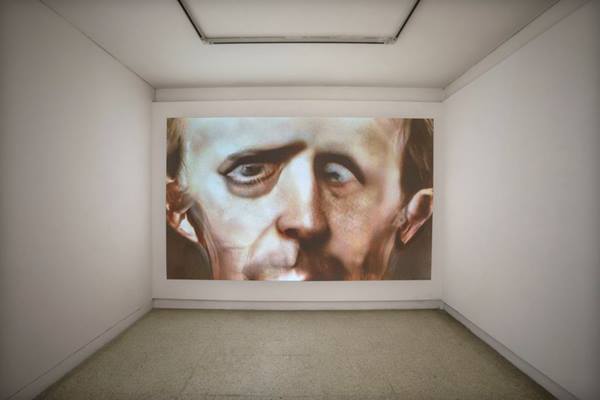
news.artnet.com
Is Bogus Intelligence the adjacent cracking Art Motion? Although experts attempt to keep us in cheque and suggest the revelation is withal in its infancy, information technology's hard not to capeesh this extraordinary innovation in the art world. Blurring the line betwixt human being and automobile, AI-generated fine art offers the states a new kind of unorthodox creativity. However, new findings exercise non come without hesitance. Some argue that fine art generated through informatics is definitely non art, or creative. All the same, the case image above created by Mario Klingemann, show usa artists are continuing to experiment, combining art and technology further, as 1.
Blockchain
Iconic Show
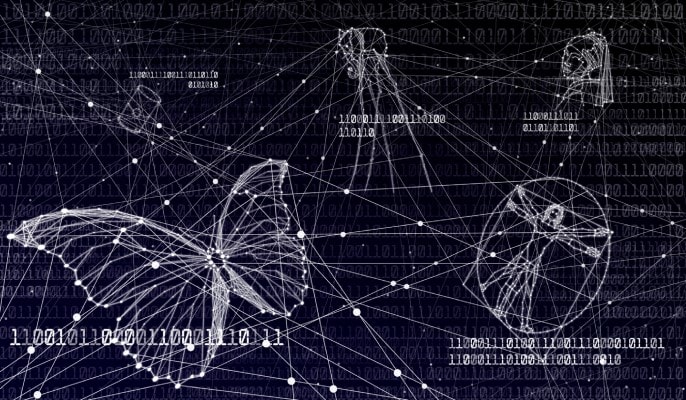
Blockchain technology has multiple purposes for the art world, and has the potential to make an fifty-fifty more pregnant impact. In a 2022 report, The Fine Arts Expert Institute (FAEI) found that over 50% of the artworks information technology had examined were either forged or not attributed to the correct artist. The rising of blockchain can assistance change this and maintain the all-important authenticity in the industry.
We spoke with Anne Bracegirdle, Senior Manager, Pace Ten most the core applications of Blockchain technology ahead of the upcoming Art and Tech: Blockchain form which she is education on at Christie's Education, New York on December 10.
What is blockchain art?
Interestingly, "blockchain art" isn't quite an accurate phrase. I'chiliad happy to outline the different ways blockchain is utilized by artists, withal, to assistance readers empathise the correct questions to ask.
"Blockchain art" may refer to physical artworks that are tokenized. More than likely, it may refer to digital art, which has the capacity to be editioned on a blockchain via a 'hash,' the equivalent of a digital identity (digital art can take the class of TIF files, gifs, jpegs etc.). Artists are also using blockchain as a medium -- notable examples are Kevin Abosch'southward projection IAMA Coin and his collaboration with Ai Wei Wei called Priceless. Artists tin can use blockchain to fractionalize (or separate) their piece of work into pieces, each of which can be owned separately. I encourage your readers to look into the Public Primal/Private Key projection at the Whitney Museum for a great example of how fractionalization can create new forms of ownership. Finally, blockchain is existence utilized for crypto-collectible trading platforms like CryptoPunks and CryptoKitties.
How tin can y'all sell fine art on a blockchain?
Blockchain technology is currently beingness used to edition and sell digital fine art via digital art marketplaces, however these platforms aren't yet mainstream. To access them, one needs to sympathize how to use a digital wallet and cryptocurrency. Once these selling platforms offset accepting Fiat currency, I think more than people will experience comfortable trading digital art. There is an opportunity here to educate people on how to buy digital art, how to access a blockchain, and how to think about digital scarcity. I believe this education is necessary for digital art to become more mainstream.
Secondly, there are opportunities to use blockchain platforms to simplify the trading of concrete artwork, and create industry-wide championship registries. To move forward with this solution, notwithstanding, the industry must decide how to connect the physical works to a blockchain registry, and in that location are a number of companies creating solutions currently. It's my belief that the information must be connected to the property for a solution to function as a truthful supply concatenation. We volition also have to agree upon which registry to use, and this controlling may require the germination of an fine art world consortium.
How can you sell blockchain fine art?
The real success in utilizing blockchain will ascend when trusted industry leaders and experts reach a consensus on the platforms we should utilize. Blockchain provides the opportunity for competitors to share data while maintaining institutional and personal privacy, which would simplify our clients' lives dramatically. The increased transparency and bachelor data would also make our industry more accessible to more than people. To go at that place, however, our first pace is to hold upon an industry provider, or providers with interoperable platforms.
Notice out more than about blockchain and art on our upcoming course in New York Fine art and Tech: Blockchain which takes place on December 10.
Virtual Reality
Yahoo News
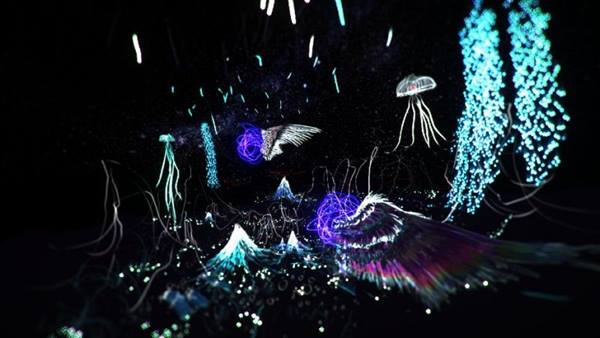
Using headsets and technologies, including hardware similar the Oculus Rift and Google Glass, institutions and artists are experimenting with virtual reality to create and share dynamic and immersive art experiences. Developing these three-dimensional and faux environments is potentially one of the nigh exciting innovations in fine art, particularly for the consumer. In many ways, it has completely transformed the artistic experience.
On the opposing side, in that location are concerns across the art earth as to who owns the pieces. For case, if created with Tilt Brush, artists own their piece of work, but Google retains a worldwide license to reproduce or modify the work for promotion or development on their ain platforms. In reality, there are jump to be teething issues with such a new piece of engineering. These are probable to exist ironed out as the industry gets up to speed with the rate that technology is progressing.
It is axiomatic that the art landscape is undergoing a drastic transformation every bit it enmeshes with technology. These ii disciplines may seem dissimilar or contradictory – however, we have shown that in that location is a lot that binds these two together. With rapid new advancements in engineering and shifting perception of art in both its artists and consumers, we can expect to see exciting new developments over the coming decades, and a better understanding of how these will affect the creative world every bit a whole.
Source: https://education.christies.com/news/2019/may/growing-relationship-between-art-technology
0 Response to "20 What Does Technology Have to Do With Art"
Post a Comment